
Aeronautics, Hypersonics, and Space
Advancing Air, High-Speed, and Space Technologies for National Security
Air and space superiority remain essential to national security, economic competitiveness, and technological leadership. Penn State’s Aeronautics, Hypersonics and Space pillar brings together expertise in aerospace engineering, propulsion, autonomy, flight systems, vertical lift technology, sensing, controls, and space systems to address the nation’s most pressing aerospace and defense challenges.
The National Security Institute leverages Penn State’s world-renowned research capabilities to develop technologies that improve aviation performance, enhance space domain awareness, advance autonomous systems, and enable next-generation aerospace platforms. Through collaborations with government agencies, industry partners, and national laboratories, researchers are translating scientific discoveries into operational capabilities that strengthen national resilience and security.

Why It Matters

Modern national security depends on secure and resilient access to air and space domains. Emerging challenges—including contested airspace, autonomous operations, resilient communications, hypersonic technologies, and increasing activity in orbit—require innovative solutions that integrate advanced engineering, data analytics, and systems design.
Penn State researchers are helping address these challenges through:
- Advanced aerospace propulsion systems
- Applied computational and experimental aerodynamics
- Hypersonic technologies
- Autonomous flight and navigation
- Vertical lift and rotorcraft innovation
- Space domain awareness
- Space operations and orbital mission design
- Unique ground-test capabilities
- Position, navigation, and timing
- Digital engineering and AI-enabled aerospace systems
Areas of Excellence
Aerospace Propulsion
Penn State researchers are developing advanced propulsion technologies that improve efficiency, performance, and sustainability for future air and space systems.
Vertical Lift Technology
Penn State is internationally recognized for rotorcraft and vertical lift research, supporting next-generation aircraft concepts, flight controls, aerodynamics, structures, and simulation.
Hypersonics and Extreme Environments
Researchers are advancing computational and experimental methods for high-speed flight, aerothermodynamics, sensing, and control of hypersonic and re-entry systems operating in extreme environments.
Space Operations and Space Domain Awareness
Faculty are developing technologies for spacecraft autonomy, orbital operations, uncertainty quantification, mission design, cislunar operations, and space domain awareness to support increasingly congested and contested space environments.
Aerospace Digital Engineering
The integration of digital engineering, high-fidelity modeling and simulation, advanced sensing, data analytics, and AI-enabled technologies is accelerating aerospace system design, testing, and deployment.
Autonomous and Resilient Aerospace Systems
Researchers are advancing autonomous flight, intelligent control systems, adaptive guidance, resilient navigation, and AI-enabled decision-making technologies for complex operational environments.
High-Performance Flight Vehicles
Penn State has an established record in designing efficient, low-drag aircraft and expanding their flight envelopes across all speed regimes, supported by advanced computational methods and wind-tunnel testing.
Featured Facilities and Centers

START Lab (Steady Thermal Aero Research Turbine Laboratory)
Penn State’s START Lab is a world-class propulsion research facility supporting research in turbine aerodynamics, heat transfer, advanced instrumentation, and sustainable aviation technologies.
Established through a partnership among Penn State, the U.S. Department of Energy’s National Energy Technology Laboratory, and Pratt & Whitney, the facility enables full-scale experimental investigations that directly impact next-generation aerospace propulsion systems.
Vertical Lift Research Center of Excellence (VLRCOE)
Penn State’s Vertical Lift Research Center of Excellence is one of only a few federally designated centers supporting research and education in rotorcraft and vertical lift technologies.
For more than 25 years, the center has partnered with the U.S. Army, U.S. Navy, NASA, and industry to advance aerodynamics, flight dynamics, controls, acoustics, structures, autonomy, and rotorcraft design. VLRCOE researchers contribute directly to the future of military and civilian vertical lift systems while educating the next generation of aerospace engineers.
Compressed Air Wind Tunnel (CAWT)
The Compressed Air Wind Tunnel enables low-cost aerodynamic testing at full-scale flight conditions using sub-scale models in a laboratory environment.
CAWT is designed to operate at 500 psia (34 atmospheres) with a 42”-diameter test section. Specific applications include UAM rotor and wind-turbine wake scaling, as well as very-high-Reynolds number boundary-layer development.
Penn State University Distributed Observatory (PSUDO)
The Penn State University Distributed Observatory (PSUDO) includes a 0.6-meter research telescope and associated sensing and computational infrastructure supporting optical tracking and characterization of resident space objects in Earth orbit and cislunar space.
The observatory enables research in space domain awareness, orbit determination, sensor tasking, and autonomous observation planning. Penn State researchers have demonstrated tracking and orbit determination of deep-space assets including Artemis and the James Webb Space Telescope, enabling new approaches for space surveillance and autonomous operations in increasingly congested and contested environments.
Gravity Offloading and Robotic Integration Platform (GRIP)
The Gravity Offloading and Robotic Integration Platform (GRIP) is a state-of-the-art facility that enables hardware-in-the-loop testing of spacecraft rendezvous, docking, servicing, assembly, and robotic operations in simulated reduced-gravity environments.
GRIP supports research in autonomous proximity operations, in-space servicing, assembly and manufacturing (ISAM), lunar surface systems, and human-robot collaboration, providing critical capabilities for the development of future space infrastructure and sustained operations in Earth orbit and cislunar space.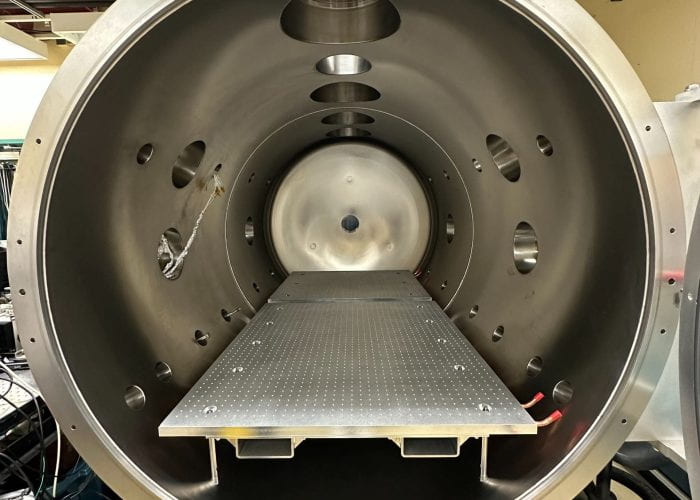
Space Propulsion Laboratory
Penn State’s Space Propulsion Laboratory is an experimental facility supporting the development and testing of next-generation spacecraft and propulsion technologies.
The laboratory enables full-scale testing of small spacecraft in low-Earth-orbit-like environments and features vacuum chambers, thrust-measurement systems, thermal cycling capabilities, plasma sources, and advanced diagnostic instrumentation. These capabilities support research in spacecraft propulsion, charging and plasma interactions, environmental effects, and resilient space systems, helping advance technologies critical for future civil, commercial, and national security missions.
Student Space Programs Laboratory (SSPL)
The Student Space Programs Laboratory (SSPL) provides undergraduate and graduate students with opportunities to design, fabricate, integrate, and operate space systems through multidisciplinary hands-on projects.
The laboratory enables students to experience the complete spacecraft design cycle while developing the systems engineering mindset required for future leaders in the aerospace workforce.
The Penn State Low-Speed Low-Turbulence Wind Tunnel
The low-speed low-turbulence wind tunnel provides diagnostic capabilities including surface pressure measurements, wake surveys, and (soon) dedicated hot-wire anemometry.
The wind tunnel is an aerodynamics-focused facility with a 3.3-ft-by-4.4-ft test section with filleted corners. The turbulence intensity in the test section is less than 0.045% for its entire operating envelope, making it one of the quietest subsonic tunnels in the western hemisphere. The tunnel has been instrumental in advancing slotted, natural-laminar-flow airfoil technology (also known as cruise-slotted airfoils), which is garnering widespread interest from both government and industry for advanced wing design.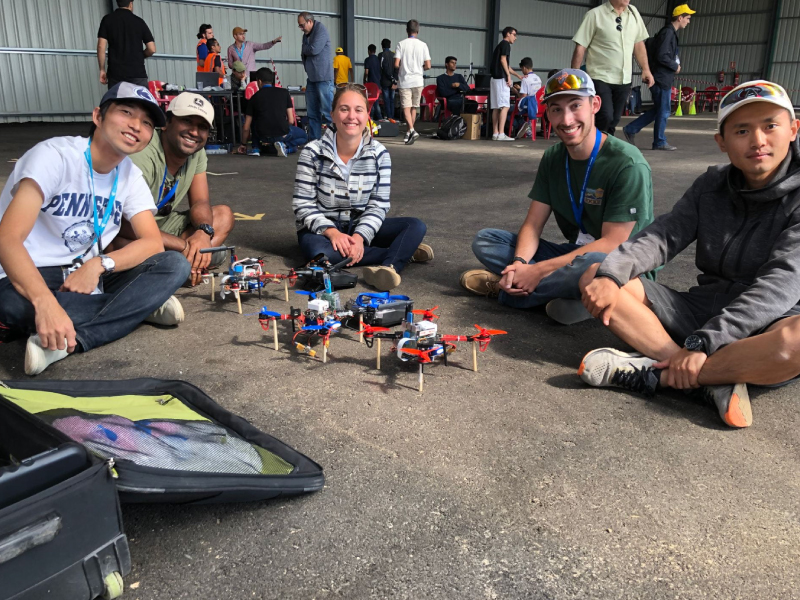
PSU UAS Research Laboratory (PURL)
The PSU UAS Research Laboratory (PURL) performs advanced Unmanned Aircraft/Aerospace System (UAS) research, including flight-testing with a variety of research systems.
The laboratory includes dedicated research vehicle systems (airplane, helicopter, multirotor, and more), a comprehensive set of simulation tools, dedicated space for indoor flight with motion capture systems, areas for aircraft maintenance/storage, an avionics workshop.Faculty Leadership Spotlight

Puneet Singla
Harry and Arlene Schell Professor of Aerospace Engineering
Puneet Singla is an internationally recognized leader in astrodynamics, guidance, navigation, and control of aerospace vehicles, uncertainty quantification, and space domain awareness. His research develops fundamental mathematical and computational methods for integrating sensing with numerical models, dynamic estimation, optimal control, and data-driven decision-making for complex dynamical systems.
His work spans applications in orbital mission design, cislunar operations, spacecraft rendezvous and proximity operations, hypersonic and re-entry vehicle mission planning, and multi-sensor space surveillance. These efforts support increasingly demanding aerospace challenges involving uncertain environments, limited observations, and autonomous decision-making.
Singla’s contributions have advanced technologies for orbit prediction, conjunction assessment, sensor tasking, and resilient space architectures, enabling next-generation capabilities for civil, commercial, and national security applications. He is a Fellow of the American Astronautical Society (AAS) and the American Institute of Aeronautics and Astronautics (AIAA), and recipient of the IEEE Judith A. Resnik Space Award for his contributions to space situational awareness.
Strategic Impact
The Aeronautics and Space pillar provides a unique combination of capabilities spanning the entire aerospace ecosystem—from airframe design, propulsion to resilient space operations and AI-enabled aerospace systems. These strengths position Penn State as a trusted partner for government agencies, industry leaders, and research organizations seeking solutions to emerging aerospace and national security challenges.

The compressed air wind tunnel (CAWT) developed by Professor Mark A. Miller, Aerospace Engineering.
Latest News and Research

Penn State Mechanical Engineering Professor David Williams, alongside mechanical engineering doctoral student Chun Sen Liu, are working to automate files for individual parts into a single system.
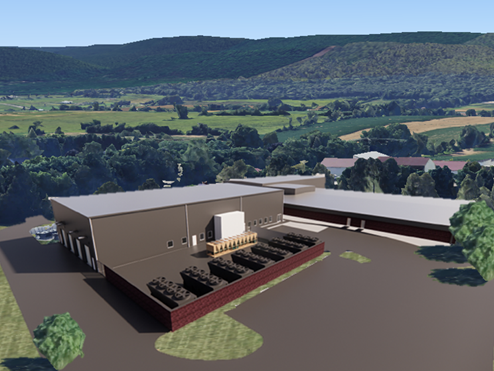
A major expansion of Penn State’s START Lab is increasing capabilities for propulsion research and supporting next-generation aviation technologies.

Penn State’s VLRCOE remains one of the nation’s leading centers for rotorcraft research, education, and workforce development.

Penn State is teaming through an NSI Industry-University Cooperative Research Center to develop emerging sustainable space technologies.

Penn State researchers are focused on inertial sensors that have a strong interest by defense and aerospace systems.
Partner with NSI
Penn State welcomes collaborations with government agencies, aerospace companies, defense organizations, and research institutions seeking innovative solutions in aviation, autonomy, propulsion, rotorcraft technologies, and space systems.